Spectral Colour
£0.00
This diagram is a new addition to the site! More information will be added ASAP 🙂
Description
Spectral Colour
TRY SOME QUICK QUESTIONS AND ANSWERS TO GET STARTED
About the diagram
Some key terms
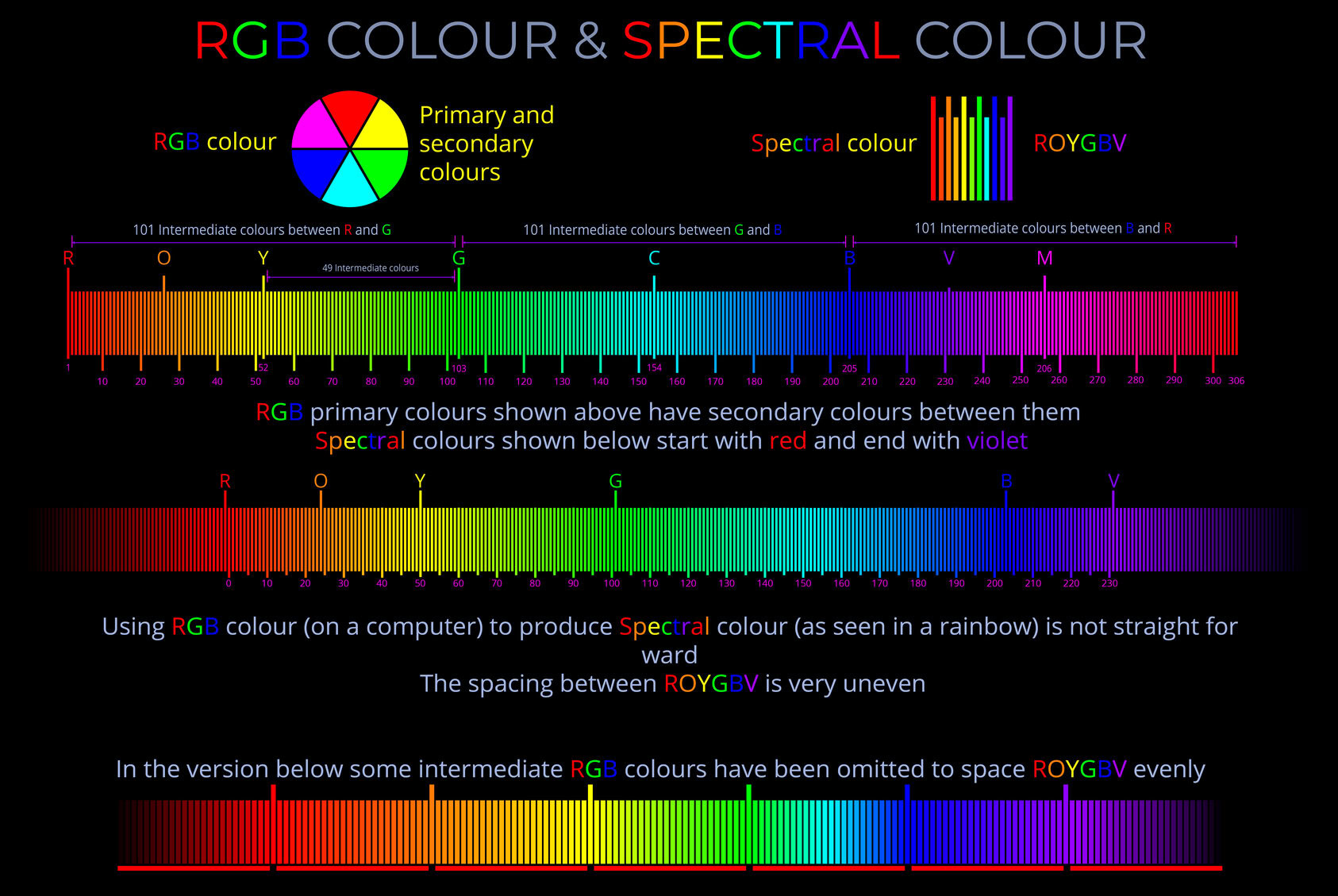
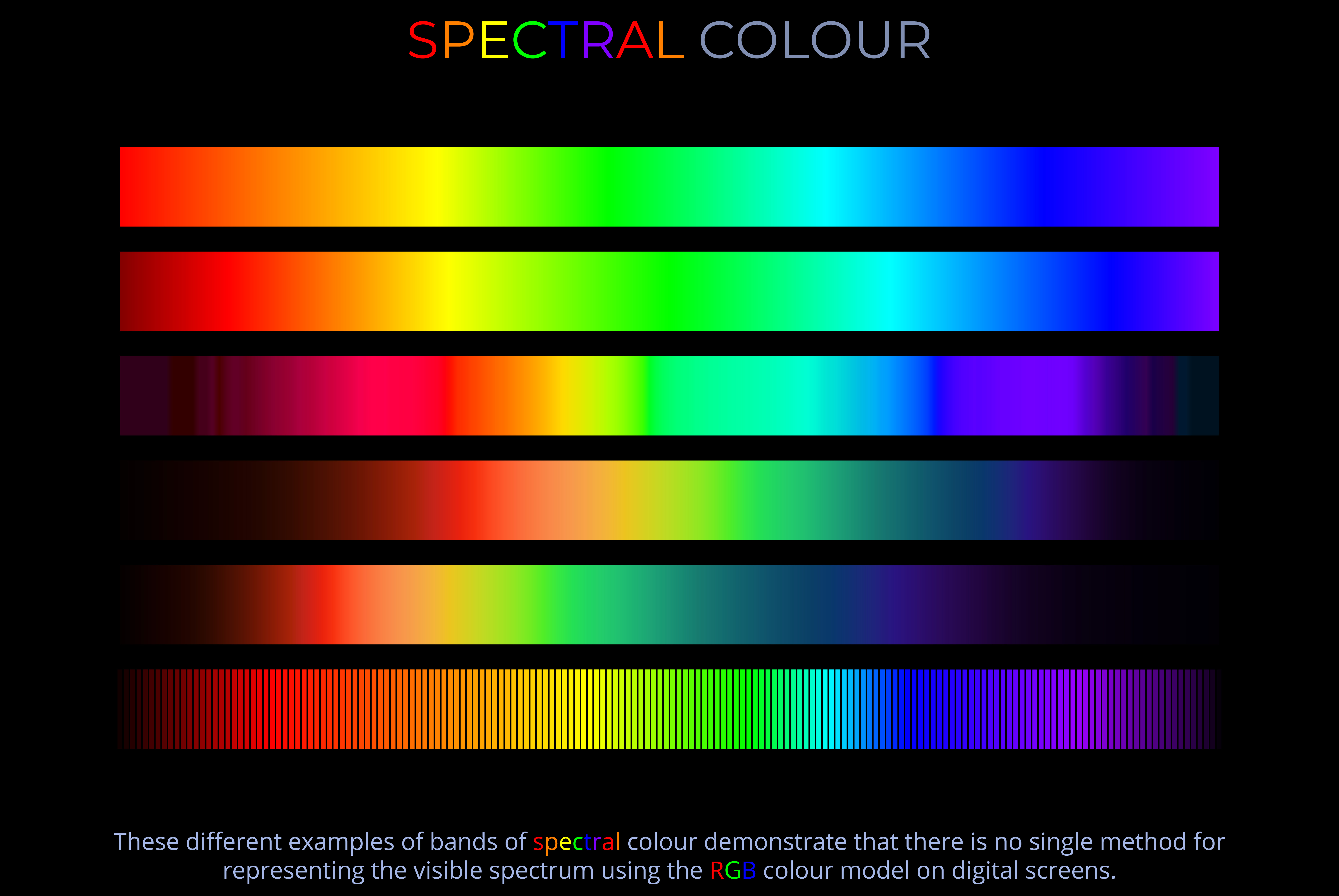
The spectral colour model represents the range of pure colours that correspond to specific wavelengths of visible light. These colours are called spectral colours because they are not created by mixing other colours but are produced by a single wavelength of light. This model is important because it directly reflects how human vision perceives light that comes from natural sources, like sunlight, which contains a range of wavelengths.
- The spectral colour model is typically represented as a continuous strip, with red at one end (longest wavelength) and violet at the other (shortest wavelength).
- Wavelengths and Colour Perception: In the spectral colour model, each wavelength corresponds to a distinct colour, ranging from red (with the longest wavelength, around 700 nanometres) to violet (with the shortest wavelength, around 400 nanometres). The human eye perceives these colours as pure because they are not the result of mixing other wavelengths.
- Pure Colours: Spectral colours are considered “pure” because they are made up of only one wavelength. This is in contrast to colours produced by mixing light (like in the RGB colour model) or pigments (in the CMY model), where a combination of wavelengths leads to different colours.
- Applications: The spectral colour model is useful in understanding natural light phenomena like rainbows, where each visible colour represents a different part of the light spectrum. It is also applied in fields like optics to describe how the eye responds to light in a precise, measurable way.
A colour model is a system or framework used to understand, organise, and manipulate colour. It ranges from basic concepts, such as the sequence of colours in a rainbow, to more advanced models like RGB, CMYK, and CIE, which are essential for accurate colour reproduction in various fields, including digital media, printing, and manufacturing.
- A colour model, underpinned by colour theory, provides a precise and replicable approach to understanding:
- How the human eye perceives light and interprets colour.
- Different types of colour, including those produced by mixing lights, pigments, or inks.
- How to manage the diverse ways colour is processed by devices such as cameras, digital screens, and printers.
- Colour models enable us to:
- Make sense of colour in relation to human vision and the world around us.
- Use colours in logical, predictable, and replicable ways.
- Understand how to mix specific colours, whether using lights, pigments, inks, or dyes.
- Specify colours using names, codes, notations, or equations.
- Organise and apply colour for different purposes, from fabrics and interiors to vehicles.
- For more information see https://lightcolourvision.org/dictionary/definition/colour-model/
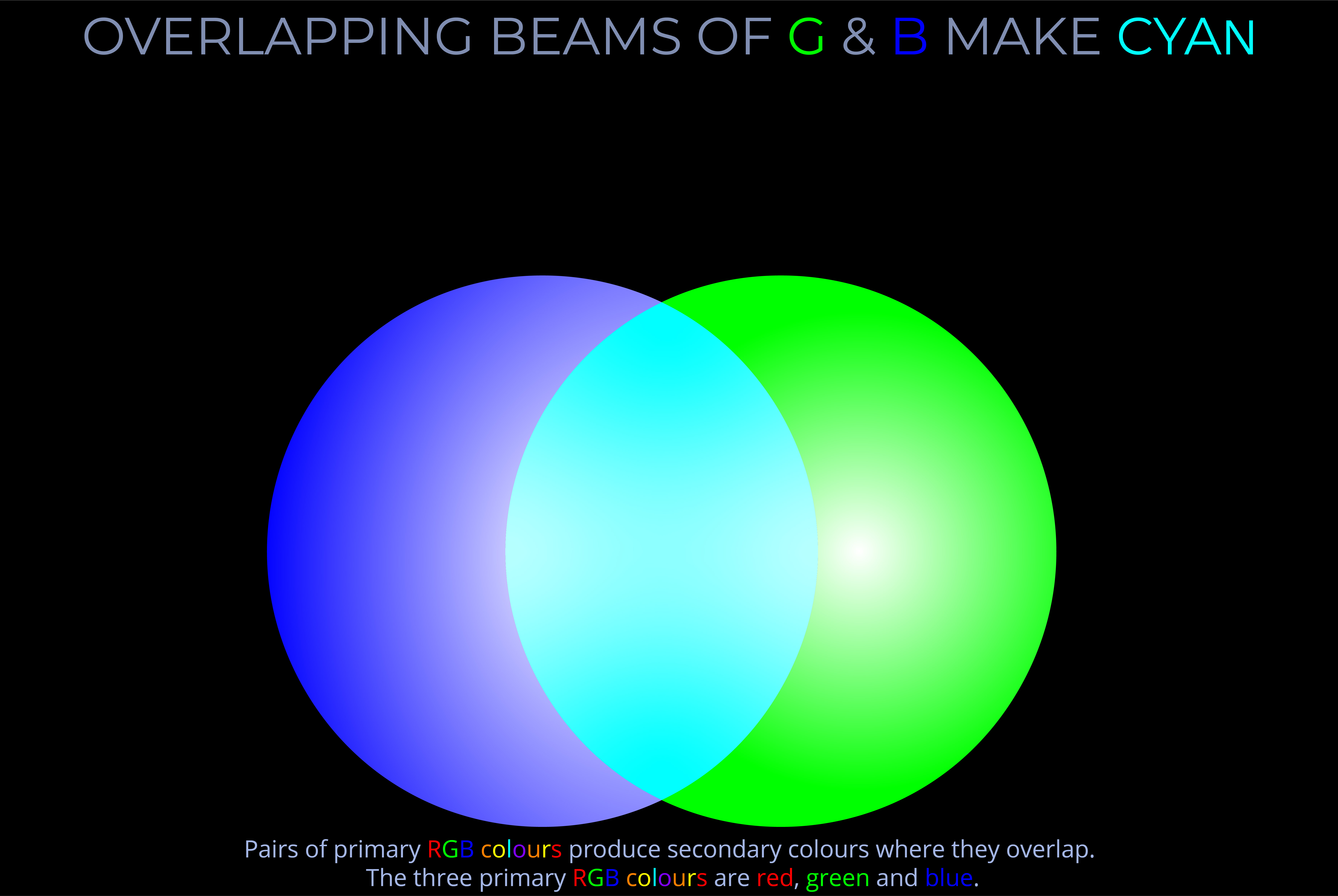
RGB colour is an additive colour model in which red, green and blue light is combined to reproduce a wide range of other colours.
- The primary colours in the RGB colour model are red, green and blue.
- In the RGB model, different combinations and intensities of red, green, and blue light are mixed to create various colours. When these three colours are combined at full intensity, they produce white light.
- Additive colour models are concerned with mixing light, not dyes, inks or pigments (these rely on subtractive colour models such as the RYB colour model and the CMY colour model).
- The RGB colour model works in practice by asking three questions of any colour: how red is it (R), how green is it (G), and how blue is it (B).
- The RGB model is popular because it can easily produce a comprehensive palette of 1530 vivid hues simply by adjusting the combination and amount of each of the three primaries it contains.
Diagrams are free to download
Related products
-

RGB Colour & Spectral Colour
£0.00 Select options This product has multiple variants. The options may be chosen on the product page -
Why an Object Appears Transparent
£0.00 Select options This product has multiple variants. The options may be chosen on the product page -
Overlapping Beams of G & B Make Cyan
£0.00 Select options This product has multiple variants. The options may be chosen on the product page