Comparing Wavelengths – Radio to Gamma
£0.00
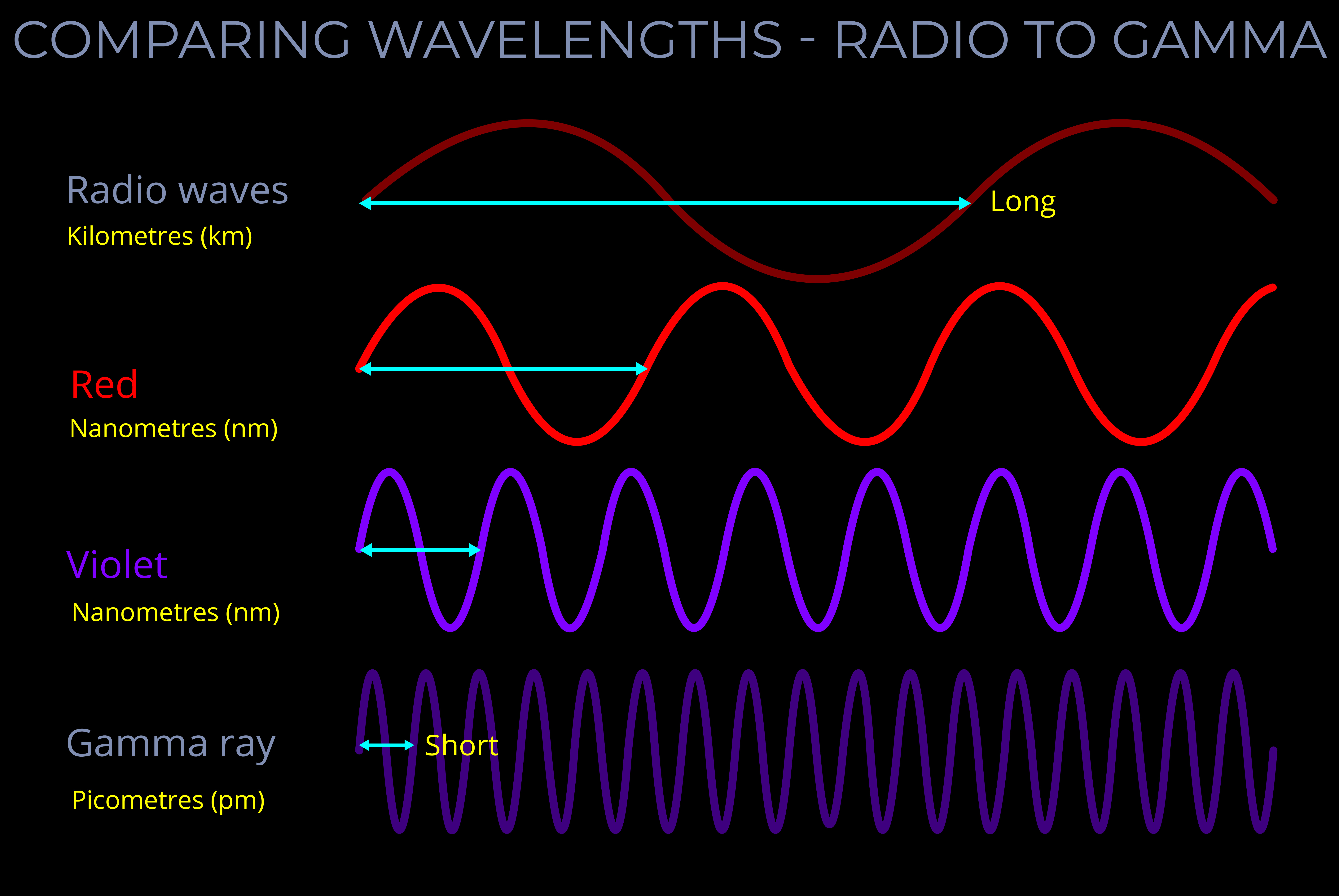
This diagram compares the wavelength of four electromagnetic waves and arranges them according to their position within the electromagnetic spectrum.
- Radio waves are shown at the top. They have the longest wavelength of the four types. These waves are shown as dull red. They are invisible to the human eye.
- Red has the longest wavelength of the visible part of the electromagnetic spectrum.
- Violet has the shortest wavelength of the visible part of the electromagnetic spectrum.
- Gamma rays are shown at the bottom. They have the shortest wavelength of the four types. These waves are shown as a dull violet. They are invisible to the human eye.
- The unit of measurement of wavelength is the metre.
- When the wavelength of electromagnetic waves is very short, metres are sub-divided into micrometres, nanometres and picometres.
- When the wavelength of electromagnetic waves is long, metres are converted into kilometres.
Description
Comparing Wavelengths - Radio to Gamma
TRY SOME QUICK QUESTIONS AND ANSWERS TO GET STARTED
Millimetres, centimetres, metres and kilometres are all used to measure the wavelengths of radio waves.
Red has the longest wavelength whilst violet has the shortest.
The wavelength of an electromagnetic wave is a measurement of the length of a single oscillation of the wave.
About the diagram
About the diagram
- This diagram compares the wavelength of four electromagnetic waves and arranges them according to their position within the electromagnetic spectrum.
- Radio waves are shown at the top. They have the longest wavelength of the four types. These waves are shown as dull red. They are invisible to the human eye.
- Red has the longest wavelength of the visible part of the electromagnetic spectrum.
- Violet has the shortest wavelength of the visible part of the electromagnetic spectrum.
- Gamma rays are shown at the bottom. They have the shortest wavelength of the four types. These waves are shown as a dull violet. They are invisible to the human eye.
- The unit of measurement of wavelength is the metre.
- When the wavelength of electromagnetic waves is very short, metres are sub-divided into micrometres, nanometres and picometres.
- When the wavelength of electromagnetic waves is long, metres are converted into kilometres.
Remember that:
- The position of an electromagnetic wave within the electromagnetic spectrum is determined by its wavelength (or frequency).
- The electromagnetic spectrum includes, in order of decreasing wavelength and increasing frequency: radio waves, microwaves, infrared radiation, visible light, ultraviolet radiation, X-rays and gamma rays.
- The electromagnetic spectrum includes, in order of the increasing size of wavelength and decreasing frequency: gamma rays, X-rays, ultraviolet radiation, visible light, infrared radiation, microwaves and radio waves.
- The electromagnetic spectrum includes all possible wavelengths of electromagnetic radiation, ranging from low energy radio waves through visible light to high energy gamma rays.
Some key terms
Wavelength measures a complete wave cycle, which is the distance from any point on a wave to the corresponding point on the next wave.
- While wavelength can be measured from any point on a wave, it is often simplest to measure from the peak of one wave to the peak of the next or from the bottom of one trough to the bottom of the next, ensuring the measurement covers the whole of the cycle.
- The wavelength of an electromagnetic wave is usually given in metres.
- The wavelength of visible light is typically measured in nanometres, with 1,000,000,000 nanometres making up a metre.
- Radio waves, visible light, and gamma waves for example, each have different ranges of wavelengths within the electromagnetic spectrum.
An electromagnetic wave carries electromagnetic radiation.
- An electromagnetic wave describes electromagnetic radiation as it propagates from a light source, travels through space and encounters different materials.
- Electromagnetic waves can be imagined as synchronised oscillations of electric and magnetic fields that propagate at the speed of light in a vacuum.
- Electromagnetic waves are similar to other types of waves in so far as they can be measured in terms of wavelength, frequency and amplitude.
- We can feel electromagnetic waves release their energy when sunlight warms our skin.
- Remember that electromagnetic radiation can be described either as an oscillating wave or as a stream of particles, called photons, which also travel in a wave-like pattern.
- The notion of waves is often used to describe phenomena such as refraction or reflection whilst the particle analogy is used when dealing with phenomena such as diffraction and interference.
The electromagnetic spectrum includes electromagnetic waves with all possible wavelengths of electromagnetic radiation, ranging from low-energy radio waves through visible light to high-energy gamma rays.
- There are no precisely defined boundaries between the bands of electromagnetic radiation in the electromagnetic spectrum.
- The electromagnetic spectrum includes, in order of increasing frequency and decreasing wavelength: radio waves, microwaves, infrared radiation, visible light, ultraviolet radiation, X-rays and gamma rays.
- Visible light is only a very small part of the electromagnetic spectrum.
Diagrams are free to download
Related products
-

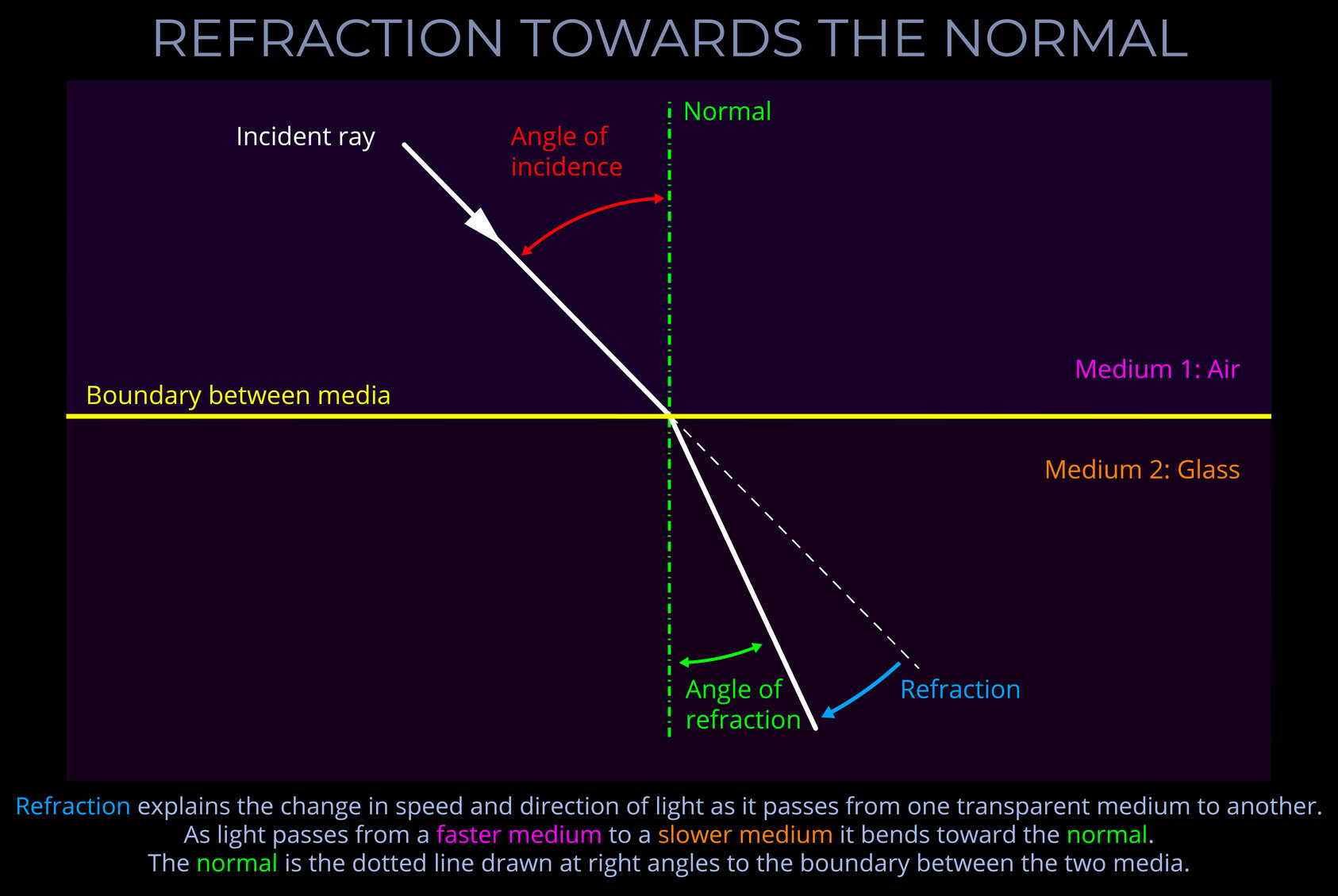
Refraction Towards the Normal
£0.00 Select options This product has multiple variants. The options may be chosen on the product page -
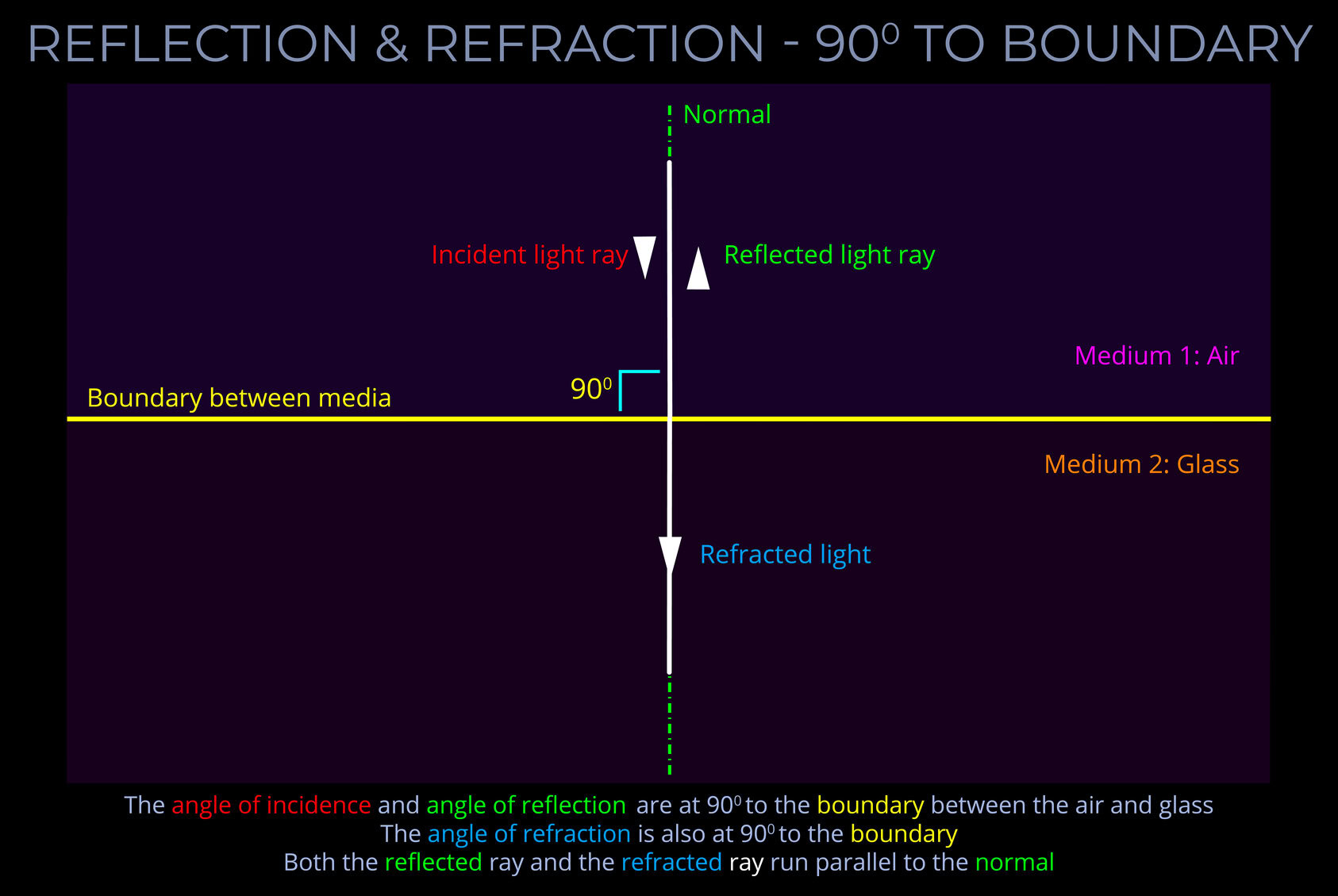
Reflection & Refraction – 90 deg to Boundary
£0.00 Select options This product has multiple variants. The options may be chosen on the product page -
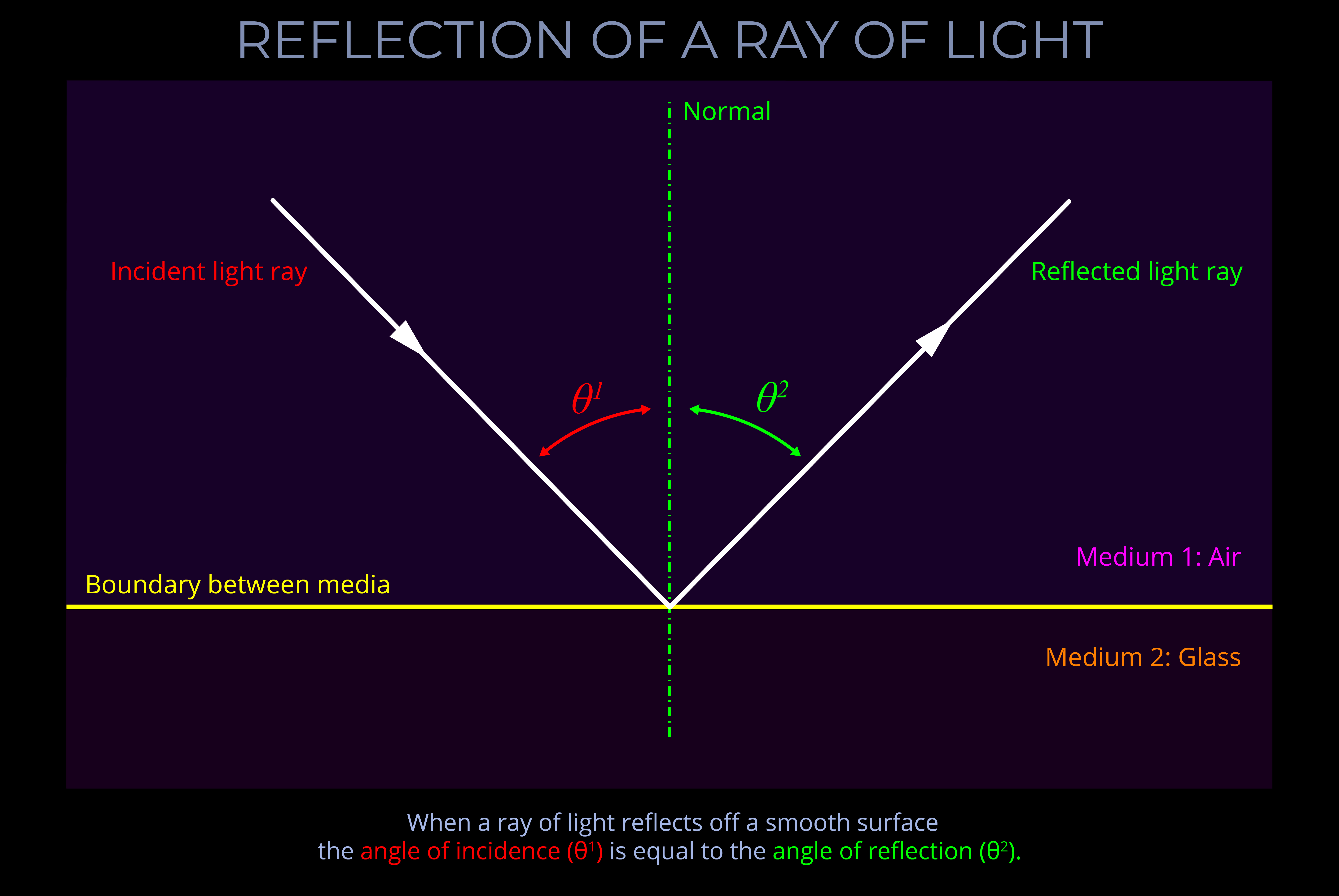
Reflection of a Ray of Light
£0.00 Select options This product has multiple variants. The options may be chosen on the product page